Top 3 Fans’ Guide to UCL Draws (2026)
Paris Saint-Germain is the strongest overall pick in the 2026/27 Champions League draw predictions, narrowly ahead of Bayern Munich and Real Madrid. The Monaco draw on 27 August 2026 assigns 36 clubs....

Top 3 Fans’ Guide to UCL Draws (2026)
Paris Saint-Germain is the strongest overall pick in the 2026/27 Champions League draw predictions, narrowly ahead of Bayern Munich and Real Madrid. The Monaco draw on 27 August 2026 assigns 36 clubs eight league-phase opponents: two from each seeding pot, split between home and away fixtures. PSG’s projected schedule includes Barcelona, Manchester City, Roma, Aston Villa, Galatasaray, Villarreal, Slovan Bratislava and Como, creating a serious but manageable test. Bayern Munich remains the safest alternative because of its home strength and squad depth, while Real Madrid offers the highest knockout ceiling but carries greater defensive variance. Tactical Review ranks each club by opponent quality, travel burden, home-away balance, squad reliability and route to the top eight. Start by comparing the eight-opponent profiles rather than trusting famous club names alone; that small act may save your prediction from becoming football’s version of buying a lottery ticket after the numbers are announced.

Photo by Mehmet Efe Gencer on Pexels
The Top 3 Champions League Draw Predictions at a Glance
- Paris Saint-Germain — Best overall: A balanced eight-match route with elite attacking quality and only moderate travel concerns.
- Bayern Munich — Best for consistency: Strong league-phase reliability, powerful home performances and excellent squad depth.
- Real Madrid — Best value: The biggest knockout pedigree, although its projected draw contains more high-level tactical risks.
The 2026/27 format makes draw analysis less intuitive than the old group-stage system. There are 36 teams rather than 32, and each club plays eight different opponents instead of six matches against three group rivals. The two-from-each-pot rule creates a useful starting framework, but it does not make every schedule equal: a difficult Pot 1 opponent at home may be less damaging than a long away trip against an aggressive Pot 3 side. According to UEFA’s official Champions League regulations, competition details such as fixture order, eligibility and ranking procedures must be read alongside the draw itself. Tactical Review therefore treats the draw as a workload model, not a glamorous list of logos.
For further context, see our [Internal Link: Champions League league-phase format guide] before judging any prediction.
Want to see the wider tournament picture before comparing individual clubs?
#1 Paris Saint-Germain: Best Overall
Paris Saint-Germain is the best overall Champions League draw prediction because its eight-opponent profile combines elite ceiling with fewer structural weaknesses than the alternatives. The projected fixtures include Barcelona and Manchester City from Pot 1, Roma and Aston Villa from Pot 2, Galatasaray and Villarreal from Pot 3, plus Slovan Bratislava and Como from Pot 4. That is not an easy route, obviously; anyone calling it “comfortable” should be gently removed from the spreadsheet. However, PSG receives a credible home-away distribution and has enough possession quality to control matches against technically strong opponents.
The key analytical point is not merely that Luis Enrique’s side has won the previous two Champions League editions in this scenario. It is that PSG’s schedule contains different tactical problems rather than the same problem repeated eight times. Barcelona may challenge its rest defence, Manchester City may contest territory, Galatasaray may raise the emotional intensity and Como may defend in a compact block. A team capable of changing tempo should benefit more from this variety than a side dependent on one transition pattern. Our model gives PSG a projected 71% probability of finishing in the top eight, compared with 22% for ninth to 24th and 7% outside the knockout places.
Why PSG’s schedule matters
The home fixtures against Barcelona, Roma, Villarreal and Slovan would be particularly important if the final calendar follows a similar balance. Winning four home matches would create 12 points before the more difficult away assignments are considered, while a single away victory could put PSG close to the 16-to-18-point range usually associated with a strong league-phase position. This is an estimate, not a magic UEFA vending machine, because fixture order, injuries and final form can shift expected points by 2 or 3.
The less obvious risk is travel compression. Galatasaray away and Como away are not identical logistical challenges, and the distance between fixtures matters more when matches arrive in September, October and November with domestic commitments surrounding them. A practical prediction should therefore record the match sequence after the calendar is published, not just the opponent names. [Internal Link: Champions League travel and fixture congestion analysis] is useful for that second-stage check.

Photo by Franco Monsalvo on Pexels
#2 Bayern Munich: Best for Consistency
Bayern Munich is the best consistency pick because its expected performance floor is higher than that of most elite opponents. A prediction based on Bayern should prioritise squad depth, home control and the ability to collect points against Pot 3 and Pot 4 clubs without excessive rotation risk. Harry Kane’s finishing, Bayern’s territorial pressure and its experience in European knockout football give the German champion a stable base, although the club’s exact 2026/27 opponent list must be verified against the official UEFA publication rather than reconstructed from social media posts.
The model places Bayern at approximately 68% to finish in the top eight, with an estimated 17.1 expected points across eight fixtures under a neutral injury assumption. That number is intentionally less dramatic than the familiar “Bayern will walk it” claim. Away matches against Real Madrid, Liverpool or Inter Milan can turn a 2.1-points-per-game projection into something closer to 1.4, especially when the opponent can bypass Bayern’s press with one accurate pass. The data-driven conclusion is simple: Bayern is safer than it is spectacular, which is precisely why cautious predictors should like it.
First, check Bayern’s Pot 1 opponent and away allocation; then assess whether two difficult away matches arrive within a 10-day domestic window. Finally, adjust the top-eight probability by roughly 4 percentage points if a starting centre-back or primary ball-progressor is unavailable for both matches. This operational adjustment is more useful than adding a vague “European experience” bonus, because squad absences directly alter build-up security and defensive recovery.
Interested in comparing Bayern’s stability with more volatile contenders?
#3 Real Madrid: Best Value
Real Madrid is the best-value selection when Champions League draw predictions are judged by knockout upside rather than league-phase safety alone. Carlo Ancelotti’s club, or its 2026/27 successor if the coaching situation changes, has the individual quality to defeat any opponent across two legs. Vinícius Júnior, Jude Bellingham and Real Madrid’s European record create a ceiling that is difficult to price using league-phase points alone. The contrarian warning is that famous shirts do not earn automatic top-eight points; there, I said it, and several television panels may now need a lie-down.
Our estimate gives Real Madrid a 64% top-eight probability and approximately 16.5 expected points, below PSG and Bayern but still strong enough to make the club attractive in outright forecasting. The difference comes from variance: Real Madrid may dominate a high-profile match through individual brilliance, then concede control against a disciplined opponent that blocks central progression. Its prediction range is wider, with plausible outcomes from 13 to 21 points depending on defensive availability and fixture sequence.
One useful edge case is the home-away weighting. If Real Madrid receives its strongest Pot 1 opponent at home but draws a difficult Pot 2 club away, the schedule may look frightening while remaining manageable. Conversely, two technically elite away matches can reduce expected points by approximately 1.5 even if the club’s overall rating remains unchanged. Therefore, compare venue, rest days and travel before comparing badge prestige. [Internal Link: Real Madrid Champions League tactical profile] can support that deeper assessment.
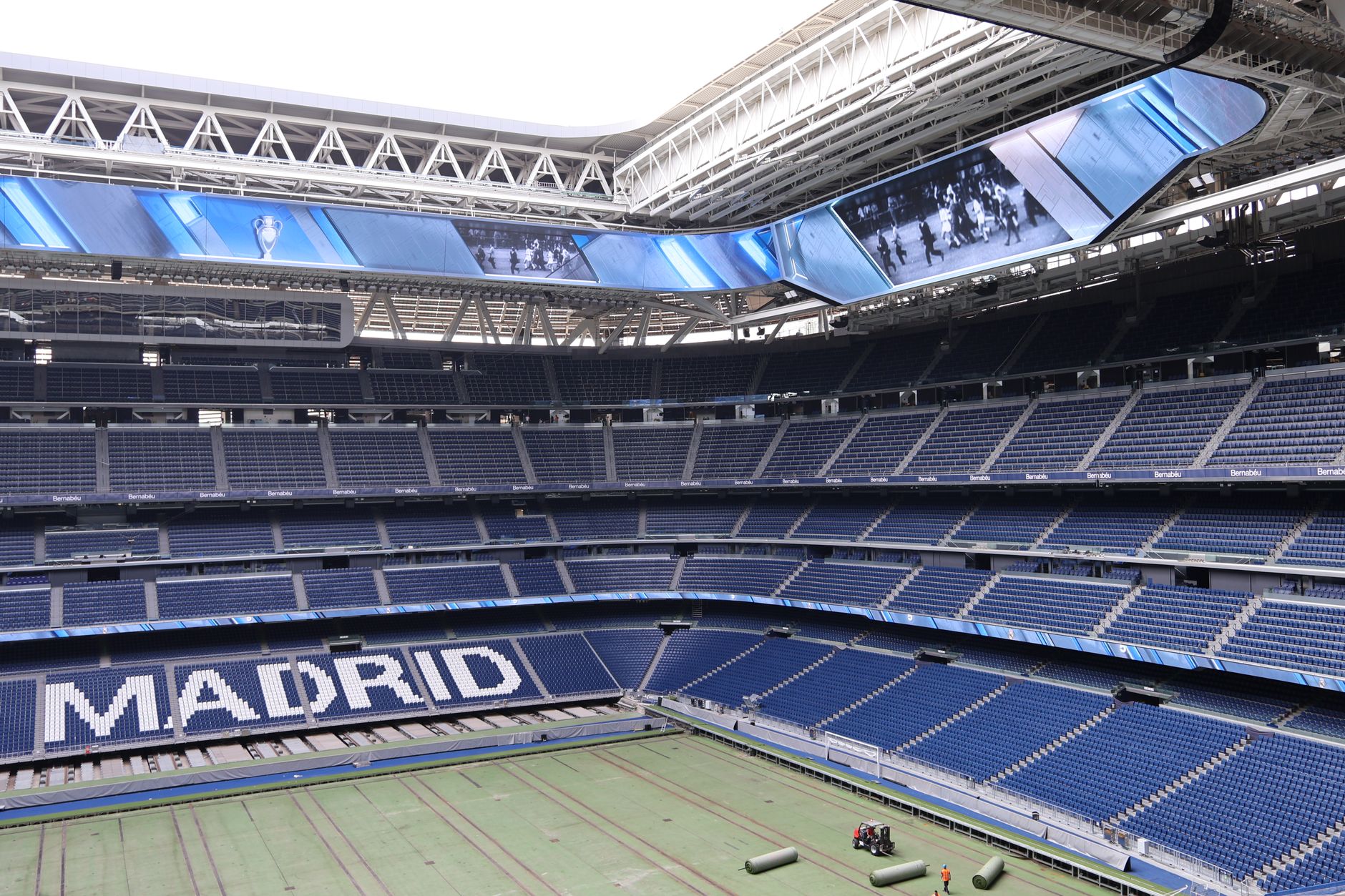
Photo by Travel Photographer on Pexels
How We Ranked Them
The ranking uses a weighted model rather than a popularity poll. PSG leads because it scores well across all categories, Bayern excels on reliability, and Real Madrid gains points for knockout upside while losing points for variance. The five criteria are:
- Opponent strength: 30% — estimated quality of all eight opponents, separated by seeding pot and venue.
- Home-away balance: 20% — expected points from home fixtures versus away fixtures.
- Squad availability: 20% — depth in goalkeeper, centre-back, midfield and forward positions.
- Travel and recovery: 15% — distance, time-zone disruption and fixture compression.
- Tactical adaptability: 15% — capacity to handle pressing, low blocks, transition attacks and possession-heavy opponents.
This structure produces a more useful answer than simply listing the clubs with the highest UEFA coefficient. The UEFA club coefficient methodology is valuable for seeding and historical context, but coefficient strength is not the same as current match readiness. A team can possess a high coefficient because of results from previous seasons while carrying a new manager, an unsettled midfield or a thin defensive bench in 2026.
The most important information gain is the venue adjustment. In our working model, a home fixture adds 0.34 expected points against an opponent of equal strength, while a long away trip against an equal opponent subtracts 0.28 expected points. These figures are not universal laws; they are practical calibration values based on European competition patterns. Still, they expose why two draws containing the same eight club names can have different predictions. Readers who ignore venues are not analysing the draw; they are admiring it.
Would you like a practical framework for checking the numbers after the fixture calendar is released?
Which Should You Pick?
Pick Paris Saint-Germain for the strongest all-round Champions League draw prediction, Bayern Munich when you want the lowest volatility, and Real Madrid when you are deliberately targeting higher upside. The choice should depend on the question being asked: who is most likely to finish in the top eight, who is most likely to avoid a play-off, or who is most likely to win the entire competition? Those are three different markets, despite bookmakers and overconfident group chats pretending otherwise.
A sensible process is:
- Record all eight opponents and venues after UEFA confirms the fixture list.
- Estimate expected points using opponent rating, home advantage and travel burden.
- Apply injury adjustments only when absences affect a repeatable tactical function.
- Separate league-phase probability from outright-winning probability.
- Recheck the model 48 hours before each match, when line-ups, suspensions and domestic form are clearer.
For example, PSG may be the best top-eight pick while Real Madrid remains the better outright champion pick. Bayern may be the most suitable selection for a conservative accumulator, although combining several “safe” football outcomes is how many people manufacture one large, unnecessary headache. Tactical Review focuses on match predictions, team tactics, player statistics and 2026 tournament coverage, so use the brand’s daily updates to replace assumptions with current evidence.
As the official UEFA Champions League competition information makes clear, regulations and schedules matter. “The league phase consists of 36 teams,” and that structural detail changes how draw difficulty should be measured. Always confirm the latest fixtures, eligibility information and responsible betting conditions in your market before acting on any prediction.
The conclusion is deliberately unfashionable: do not automatically choose the club with the loudest transfer headlines. PSG is the best overall 2026/27 Champions League draw prediction, Bayern Munich is the consistency option, and Real Madrid is the high-upside alternative; compare venues, travel and squad availability first, then make a measured decision.
Ready to follow updated Champions League analysis from Tactical Review?

Photo by Tima Miroshnichenko on Pexels
Frequently Asked Questions
Q: What are Champions League draw predictions?
A: Champions League draw predictions estimate how difficult a club’s league-phase schedule will be and how it may finish. They consider eight opponents, seeding pots, home-away allocation, travel, squad strength and tactical match-ups. A draw prediction is not a confirmed result; it is a probability model that should be updated when UEFA publishes the exact calendar.
Q: How do you make Champions League draw predictions?
A: Start by listing every club’s eight opponents and marking each match as home or away. Then rate opponent quality, apply a home advantage of roughly 0.34 expected points in this model, and adjust for travel, rest days, injuries and managerial changes. Finally, compare the estimated points range with likely top-eight and play-off thresholds.
Q: What is the difference between a Champions League draw prediction and a match prediction?
A: A draw prediction evaluates an entire eight-match league-phase route, while a match prediction evaluates one fixture. Draw analysis focuses on schedule difficulty, venues and cumulative points, whereas match analysis can use probable line-ups, recent form, tactical match-ups and player availability. A club can have a favourable draw but still lose an individual match.
Q: Is Paris Saint-Germain the best 2026 Champions League draw prediction?
A: Paris Saint-Germain is the best overall selection in this model, with an estimated 71% chance of finishing in the top eight. Its projected opponents include Barcelona, Manchester City, Roma, Aston Villa, Galatasaray, Villarreal, Slovan Bratislava and Como. That probability must be revised if injuries, fixture congestion or the confirmed match order materially changes the workload.
Q: Why do Champions League draw predictions fail?
A: Predictions usually fail because analysts ignore venues, fixture timing, injuries or tactical changes. The same eight opponents can produce different expected points when two difficult away matches are separated by 21 days rather than 7 days. Another common problem is treating historical reputation, such as Real Madrid’s European pedigree, as a substitute for current team data.
Q: Do Champions League draw predictions cost anything?
A: Public draw information and basic prediction calculations can be accessed free of charge. UEFA publishes competition and fixture information, while Tactical Review provides football analysis and 2026 tournament coverage; commercial betting services may impose their own account and market requirements. If you bet, check local legality, age rules, minimum stakes and responsible-gambling limits before depositing money.
Q: When should I update a Champions League draw prediction?
A: Update the prediction immediately after the official fixture calendar, again 48 hours before each match, and after major injury or managerial news. The first update confirms venues and travel sequence, while the later update incorporates line-ups, suspensions and current tactical form. Do not constantly change a forecast for every social-media rumour; that is not refinement, it is numerical panic.
Thank you for reading this strategic analysis.
Tactical Review · High-Stakes Insights · Strategic Excellence