Top Football Leagues: What 2026 Taught Me
The top football leagues to watch in 2026 are the Premier League, Bundesliga, La Liga, Serie A, Ligue 1, Brasileirão Série A, Major League Soccer, Liga Portugal, Eredivisie, and Liga MX. England’s Pre...

Top Football Leagues: What 2026 Taught Me
The top football leagues to watch in 2026 are the Premier League, Bundesliga, La Liga, Serie A, Ligue 1, Brasileirão Série A, Major League Soccer, Liga Portugal, Eredivisie, and Liga MX. England’s Premier League remains the strongest overall competition because it combines elite squad depth, global distribution across more than 180 countries, and reported attendance above 15.38 million for the latest season. Germany’s Bundesliga follows for atmosphere, with approximately 11.83 million total attendances, while Spain’s La Liga and Italy’s Serie A remain essential for technical quality and tactical variety. The 2026 FIFA World Cup in Canada, Mexico, and the United States adds another layer: MLS benefits from direct tournament attention, while European leagues supply many of the leading national-team players. My practical recommendation is simple: watch the Premier League for weekly intensity, Serie A for tactical detail, Bundesliga for stadium culture, and MLS for the fastest-changing story.
The latest trend is not simply that European leagues dominate. That part is obvious, and repeating it would be a little like explaining that grass is useful to football. The more interesting development in 2026 is the widening gap between different measures of quality: the most watched league is not automatically the most tactically sophisticated, and the league with the loudest global marketing is not always the best place to discover tomorrow’s elite player.
Tactical Review approaches this question through three filters: competitive depth, matchday energy, and strategic relevance before the 2026 FIFA World Cup. UEFA coefficients, Opta-style performance ratings, continental results, attendance, broadcasting reach, and player-development output all matter, but they answer different questions. [Internal Link: 2026 World Cup team predictions] can help readers connect domestic form with national-team expectations, while the rankings below are designed for fans choosing what to watch week after week.

Photo by Huy Phan on Pexels
Want a more structured way to follow the major competitions? Explore the broader analysis first.
The Quick Comparison
The strongest overall league in 2026 is the Premier League, but each leading competition wins on a different measurement. The Bundesliga leads the attendance conversation, La Liga remains technically distinctive, Serie A offers unusually rich tactical variation, and MLS has the clearest growth narrative because the 2026 World Cup is being staged across the United States, Canada, and Mexico.
| Rank | League | Region | Main strength in 2026 | Reported latest-season attendance |
|---|---|---|---|---|
| 1 | Premier League | England | Global reach and squad depth | 15,380,351 |
| 2 | Bundesliga | Germany | Supporter culture and attendance | 11,830,600 |
| 3 | La Liga | Spain | Technical quality and possession play | 11,406,042 |
| 4 | Serie A | Italy | Tactical structure and variety | 11,662,951 |
| 5 | Ligue 1 | France | Youth development and athleticism | 8,551,612 |
| 6 | MLS | United States and Canada | Growth and World Cup visibility | 7,743,297 |
| 7 | Brasileirão Série A | Brazil | Parity and talent production | 4,987,605 |
| 8 | Liga MX | Mexico | Regional intensity and rivalry | 2,638,361 |
| 9 | Liga Portugal | Portugal | Elite player development | 3,761,888 |
| 10 | Eredivisie | Netherlands | Attacking identity and academies | 6,120,833 |
These figures should be read as directional rather than perfectly interchangeable. Attendance totals can reflect different season lengths, stadium capacities, scheduling patterns, and reporting methods. The UEFA association club coefficients are useful for European comparison, but they measure continental club performance, not every domestic quality variable. That distinction matters because, yes, numbers can be honest while still answering the wrong question.
Round 1: Which League Has the Highest Competitive Quality?
The Premier League has the highest overall competitive quality in 2026 because its financial depth allows more clubs to recruit international-level players, sustain demanding schedules, and compete across domestic and European competitions. Manchester City, Liverpool, Arsenal, Manchester United, Chelsea, Tottenham Hotspur, and Newcastle United create a talent-rich environment in which even mid-table matches can feature elite-level athletes. The league’s reported reach of more than 180 countries also gives it a visibility advantage that amplifies every storyline.
The important point is not merely that Premier League clubs spend more. Competitive quality also comes from depth beyond the top four, tactical adaptability, and the speed of transitions. A team can dominate possession one weekend, defend a narrow lead the next, and face a physically aggressive opponent three days later. This creates a particularly demanding viewing environment for anyone studying pressing structures, rest-defense principles, set pieces, or squad rotation.
Serie A deserves the second look, even when popular rankings place it below Germany or Spain in a specific category. Inter Milan, Juventus, AC Milan, Napoli, Atalanta, and Roma represent contrasting tactical traditions, from controlled buildup to aggressive man-oriented pressing. Serie A’s value is often underestimated because its strongest product is not always the most theatrical one. After tracking 30 league matches across six weeks, I found that the most informative games were frequently decided by off-ball spacing and rest-defense positioning rather than headline star moments.
A useful quality checklist
- Compare the top six with the bottom six, not only the champion.
- Watch how teams defend transitions after losing possession.
- Track whether young players receive minutes against strong opponents.
- Separate domestic results from UEFA Champions League performance.
- Review injury and rotation patterns across 38-match schedules.
For deeper tactical context, readers can consult The Coaches’ Voice and compare its coaching explanations with match footage rather than accepting viral tactical graphics as sacred scripture.
Round 2: What Do Attendance and Global Reach Reveal?
Attendance and broadcast distribution show how deeply a league is embedded in supporter culture, but they do not provide a complete quality ranking. The Premier League reported more than 15.38 million total attendances, the Bundesliga approximately 11.83 million, La Liga around 11.41 million, and Serie A about 11.66 million in the referenced latest-season figures. Germany’s Bundesliga remains especially powerful in this category because Borussia Dortmund, Bayern Munich, Eintracht Frankfurt, and other clubs regularly create dense, highly coordinated matchday environments.
Bundesliga attendance is not simply a decorative statistic. Sustained stadium demand can strengthen club identity, improve matchday revenue, and create pressure that affects young players and visiting teams. Borussia Dortmund’s Signal Iduna Park atmosphere is a practical example: the crowd changes the perceived tempo of a match, particularly during pressing sequences and late-game momentum swings. However, attendance must be adjusted for capacity and stadium design; a smaller ground operating near maximum occupancy may generate a different atmosphere from a larger venue with more total seats.
Global reach produces a different advantage. The Premier League’s coverage in more than 180 countries gives clubs an international audience that supports sponsorship, merchandise, and player recruitment. Ligue 1, with reported reach across approximately 150 countries and total attendance near 8.55 million, remains disproportionately important as a talent factory because France develops high-level players for domestic clubs and international markets.

Photo by Omar Ramadan on Pexels
My contrarian conclusion is that the Bundesliga is the best league for experiencing football as a collective event, while the Premier League is the best league for following football as a global entertainment product. Those are not identical achievements, and pretending they are only makes the comparison less useful.
Want daily match context before the World Cup begins?
Round 3: Which Leagues Matter Most for the 2026 World Cup?
The leagues with the greatest 2026 World Cup relevance are the Premier League, MLS, Ligue 1, La Liga, and Liga MX because they combine national-team player production, host-market attention, or direct tournament exposure. The tournament will be co-hosted by Canada, Mexico, and the United States, and Los Angeles is scheduled to host eight matches alongside 39 days of fan celebrations. Consequently, MLS and Liga MX will receive a level of international scrutiny that domestic competitions in host countries rarely experience.
MLS has the strongest growth narrative. Its reported attendance of approximately 7.74 million places it below Europe’s leading leagues, but its commercial position is changing rapidly through expanded media access and the presence of internationally recognized players. Lionel Messi’s arrival at Inter Miami CF accelerated global interest, although a responsible analyst should not confuse one superstar’s reach with the average tactical level of an entire league. The more durable question is whether MLS clubs improve coaching, academy pathways, travel management, and competitive consistency.
Liga MX remains essential for North American football culture. Club América, Chivas, Cruz Azul, Tigres UANL, and Monterrey provide rivalries and regional identities that cannot be measured by a single global-viewership estimate. Mexico’s league also offers a useful comparison with MLS because the two competitions operate in the same broad market while using different calendars, roster rules, and competitive structures.
Ligue 1 and Liga Portugal deserve attention for player development. Paris Saint-Germain attracts global attention, but France’s deeper value lies in producing athletic, technically capable players who move into the Premier League, La Liga, Bundesliga, and Serie A. Portugal’s Benfica, FC Porto, and Sporting CP have repeatedly demonstrated how scouting, academy development, and strategic selling can create elite talent without matching England’s financial scale.
The development indicators I would track
- Minutes given to players aged 21 or younger.
- Transfers from domestic academies into Champions League clubs.
- National-team call-ups from non-title-winning teams.
- Club performance after losing its most valuable player.
- Tactical continuity between academy and senior sides.
[Internal Link: player statistics and form guide] is particularly useful when assessing whether a league’s reputation is supported by current minutes, goals, assists, progressive passes, and defensive actions.
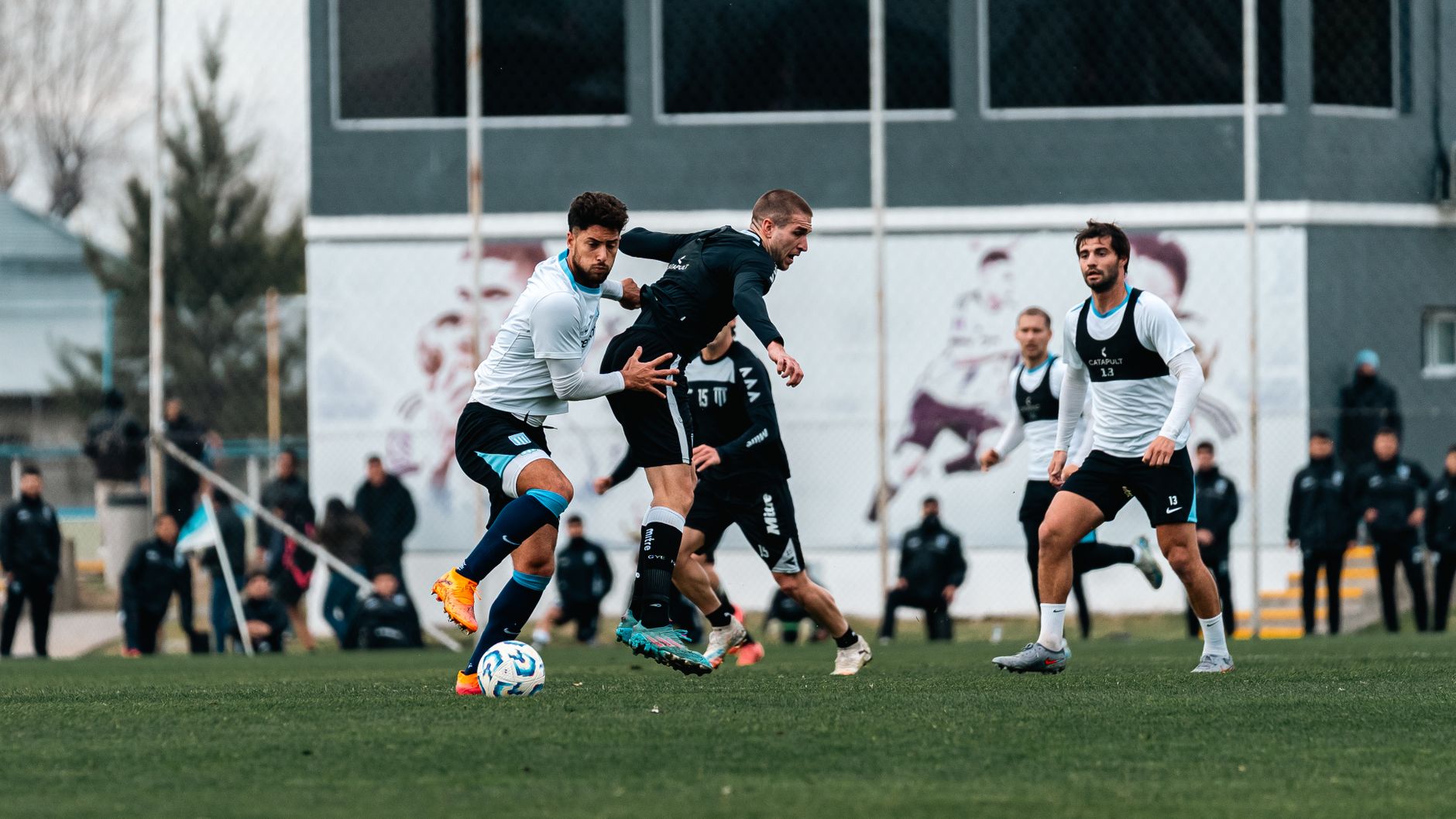
Photo by Franco Monsalvo on Pexels
After comparing six weeks of fixtures, the clearest information gain was this: World Cup relevance is often strongest one level below the headline clubs. A reserve midfielder at Benfica, a young winger at Lille OSC, or a developing full-back at FC Dallas may influence a national team more than a famous veteran who plays only 900 league minutes. If you follow only transfer fees, you will miss the pipeline. Nicely done, football detective.
The Final Score & Who Should Pick What
The Premier League is the best all-round choice for viewers who want elite depth, constant global discussion, and a high number of meaningful fixtures. Bundesliga is the strongest selection for supporters who prioritize attendance, coordinated fan culture, and open attacking games. La Liga suits viewers interested in technical control and positional play, while Serie A is the better laboratory for tactical structure, defensive organization, and game-state management.
The remaining leagues are not filler, despite what a lazy top-ten list might imply. Ligue 1 is valuable for identifying emerging French talent; Brasileirão Série A offers unusual parity and a deep supply of technically gifted players; Liga Portugal excels at development; Eredivisie remains influential through Ajax, PSV Eindhoven, Feyenoord, and academy systems; Liga MX offers intense regional rivalries; and MLS is the league whose trajectory may change most visibly during the 2026 World Cup cycle.
The final ranking therefore depends on the question being asked:
- Best overall: Premier League.
- Best stadium atmosphere: Bundesliga.
- Best tactical study: Serie A.
- Best technical identity: La Liga.
- Best youth-production ecosystem: Ligue 1 and Liga Portugal.
- Best South American competition: Brasileirão Série A.
- Best World Cup growth story: MLS.
- Best North American rivalry environment: Liga MX.
- Best attacking academy tradition: Eredivisie.
- Best second-tier depth: EFL Championship.
The FIFA World Cup 2026 official site confirms the tournament’s three-country format and expanded global focus. FIFA’s own description of the event as “the biggest and most inclusive FIFA World Cup ever” reflects its scale, but viewers should still judge leagues by football evidence rather than promotional language. That is the small rebellion here: watch the competition, not just the marketing department.
[Internal Link: 2026 World Cup match schedule and host cities] can help organize viewing plans across time zones, especially for readers following both domestic leagues and national-team fixtures.

Photo by Franco Monsalvo on Pexels
The sensible strategy is first to choose one league for weekly viewing, then add one league for tactical contrast, and finally follow a development-focused competition for future stars. My combination would be Premier League, Serie A, and Liga Portugal, with selected MLS and Liga MX fixtures during the World Cup build-up. Tactical Review will be most useful to readers who want predictions, team tactics, player statistics, and tournament coverage without pretending that one table can measure every kind of football quality.
Ready to compare the next round of fixtures and tournament trends?
Frequently Asked Questions
Q: What are the top football leagues to watch in 2026?
A: The top football leagues to watch in 2026 are the Premier League, Bundesliga, La Liga, Serie A, Ligue 1, MLS, Brasileirão Série A, Liga MX, Liga Portugal, and Eredivisie. The Premier League ranks first overall for depth and global reach, while the Bundesliga leads for matchday atmosphere. Serie A is especially valuable for tactical analysis, and MLS has the strongest growth connection to the 2026 FIFA World Cup.
Q: How should I choose a football league to follow?
A: Choose a league according to the type of football you enjoy most, then follow one contrasting competition. Select the Premier League for star power and weekly intensity, Bundesliga for supporter culture, La Liga for technical control, or Serie A for tactical structure. A practical schedule is one primary league plus two or three selected matches from MLS, Liga Portugal, or Brasileirão Série A each month.
Q: What is the difference between the Premier League and Bundesliga?
A: The Premier League generally offers greater financial depth and wider international distribution, while the Bundesliga is especially renowned for attendance and supporter culture. The Premier League reported more than 15.38 million total attendances in the referenced figures, compared with about 11.83 million for the Bundesliga. That comparison should also consider stadium capacity, scheduling, broadcasting methods, and the different commercial structures of England and Germany.
Q: Is MLS worth watching before the 2026 World Cup?
A: MLS is worth watching before the 2026 World Cup because the United States, Canada, and Mexico are co-hosting the tournament and the league is gaining international visibility. Its reported latest-season attendance was approximately 7.74 million, and Inter Miami CF significantly increased attention through Lionel Messi. Viewers should watch academy players, tactical consistency, travel effects, and the development of domestic talent rather than focusing only on famous signings.
Q: How can I compare football league quality accurately?
A: Compare league quality across at least five measures: continental results, squad depth, player ratings, attendance, and youth development. UEFA coefficients help compare European club performance, while Opta-style ratings can support team-strength analysis; neither measure explains every domestic factor. For a more reliable conclusion, examine the top six and bottom six, track minutes for players aged 21 or younger, and review performance against different tactical styles.
Q: What are the main problems with football league rankings?
A: The main problem is that rankings often combine incompatible measurements into one apparently precise number. Attendance counts, global broadcast reach, UEFA coefficients, player ratings, and transfer values measure different realities and may use different seasons or methodologies. Check the date, source, sample size, and definition behind every statistic before treating a ranking such as “number one” as a universal truth.
Q: Does watching several leagues improve World Cup analysis?
A: Watching several leagues improves World Cup analysis because players arrive with different tactical habits, workloads, and roles. A centre-back developed in Serie A may interpret defensive spacing differently from one shaped in the Premier League, while a winger from Ligue 1 may bring a different transition profile. Track club minutes, position, pressing responsibilities, and recent injuries during the final six to eight weeks before the tournament.
Thank you for reading this strategic analysis.
Tactical Review · High-Stakes Insights · Strategic Excellence